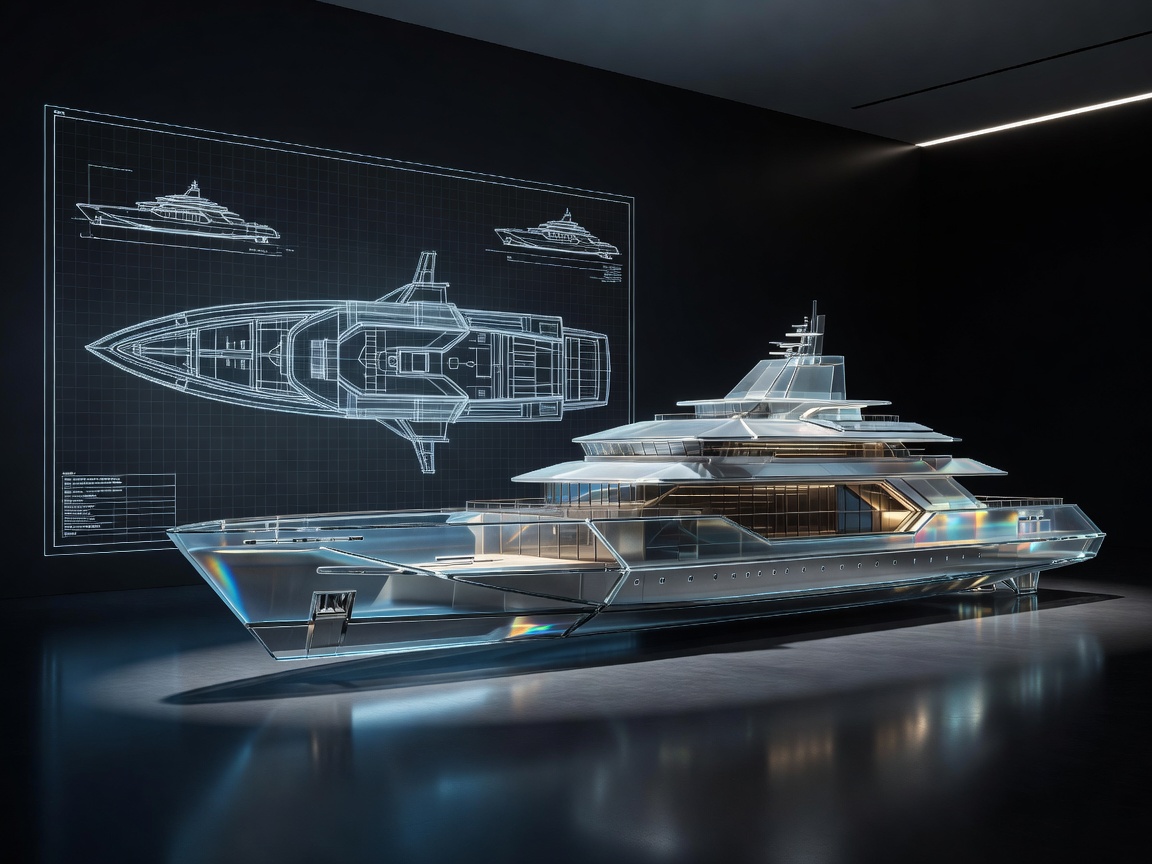
For decades, superyacht design adhered strictly to traditional proportions: a white raked bow, tiered aft decks, and classic interior layouts. However, European naval architecture yards in Germany, the Netherlands, Italy, and Monaco are engineering a dramatic paradigm shift.
1. The Rise of Reverse Bows and Stealth Geometries
Inspired by military destroyers and trimaran hull dynamics, reverse bows (X-bows) allow vessels to slice directly through wave peaks rather than riding over them. This significantly reduces pitching motion and vertical slamming acceleration, ensuring smoother passage in rough seas while drastically cutting fuel consumption.
"Form no longer follows tradition; form follows fluid dynamics and pure artistic expression."
2. Structural Glass as a Load-Bearing Element
Advancements in multi-laminated chemically toughened glass have transformed windows from simple portholes into structural load-bearing superstructure walls. Vessels like 'Yas' and 'Sailing Yacht A' utilize thousands of square meters of curved compound glass that withstand extreme oceanic forces without requiring heavy steel framing support.
3. Zero-Emission Hydrogen Fuel Cells & Hybrid Propulsion
In addition to bold aesthetics, European yards are leading green maritime propulsion. Modern radical concepts feature liquid hydrogen fuel cells paired with azimuth pods, allowing silent zero-emission cruising in delicate ecological zones such as the Norwegian fjords and Mediterranean marine sanctuaries.